
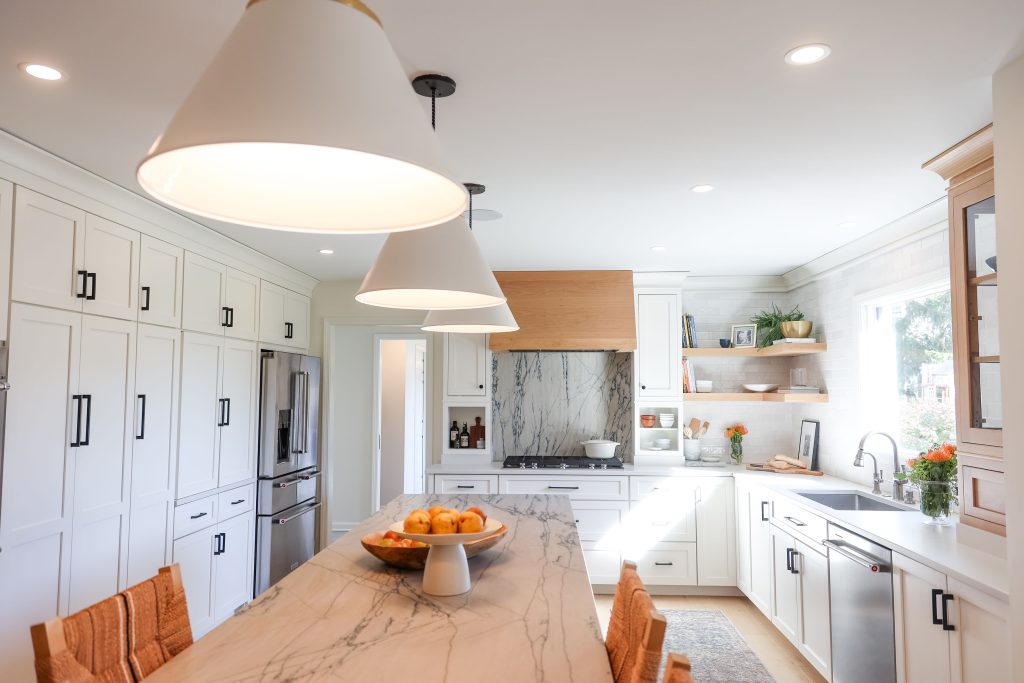
One of the reasons homeowners love stone countertops is how durable they are. They can last for years without cracking, peeling, warping, chipping, or staining when you care for them properly.
While granite is still king of the countertops, quartzite is becoming increasingly popular. It’s got an elegant look, much like marble, but it’s even more durable than granite. On the Mohs Scale, which measures mineral hardness, quartzite is scored at 7, while granite scores from 6 to 6.5 (depending on the variety and purity).
But what makes quartzite so tough? Its durability doesn’t happen by chance; it’s the result of unique geological processes that take place over millions of years.
A Natural Transformation Under Pressure
Quartzite begins its life as sandstone, a sedimentary rock composed mostly of loose quartz grains bonded together– kind of like natural cement. Over time, as layers of earth accumulate above it, that sandstone is buried and subjected to intense heat and pressure. These conditions drive the transformation from sandstone into quartzite, a process known as metamorphism.
During metamorphism, the quartz grains within the sandstone recrystallize and fuse tightly together. This interlocking crystalline structure is what gives quartzite its exceptional strength. Unlike the original sandstone, which is relatively soft and somewhat crumbly, quartzite becomes hard, dense, and highly resistant to abrasion.

High Quartz Content and Hardness
One of the defining characteristics of quartzite is its high quartz content. Most quartzite is composed of more than 90% quartz, with some varieties exceeding 99%. The mineral quartz (not to be confused with the engineered stone) is what gives quartzite its 7 Mohs scale score. To put that in perspective, that means it’s harder than steel (usually around a Mohs 4-5). This high quartz concentration is directly responsible for quartzite’s ability to withstand wear and tear.
Resistance to Heat and Pressure
Quartzite’s durability extends beyond surface hardness. Because it formed under extreme heat and pressure, it is inherently stable under thermal stress. This makes it highly resistant to damage from hot pots, pans, and baking dishes, which is important in a busy kitchen. While it’s always wise to use protective trivets, quartzite can handle short bursts of heat better than many other countertop materials.
Its strength also allows for design flexibility. Quartzite is well-suited for large kitchen islands, long countertop spans, and full-height backsplashes. Fabricators can create detailed edge profiles and custom shapes without worrying about the stone chipping or cracking during installation, provided it’s handled professionally.

Low Porosity with Proper Sealing
Although quartzite is dense and durable, it is still a natural stone and has some porosity. Left untreated, it may absorb moisture or stain from spills. However, with proper sealing and maintanance, quartzite becomes resistant to water, oils, and other liquids.
What sets quartzite apart is that it offers this level of performance while retaining its unique visual appeal. Many varieties feature delicate veining, soft movement, and neutral tones that fit into a wide range of styles. It brings the organic beauty of marble with the resilience of harder stones, creating a perfect combination for modern homes.
Built To Last In High-Traffic Spaces
Quartzite’s durability